

A New Chapter in the Algorithm Wars
Prepare yourself for a deadly combo of algorithm + generative AI that will suck your audience dry.

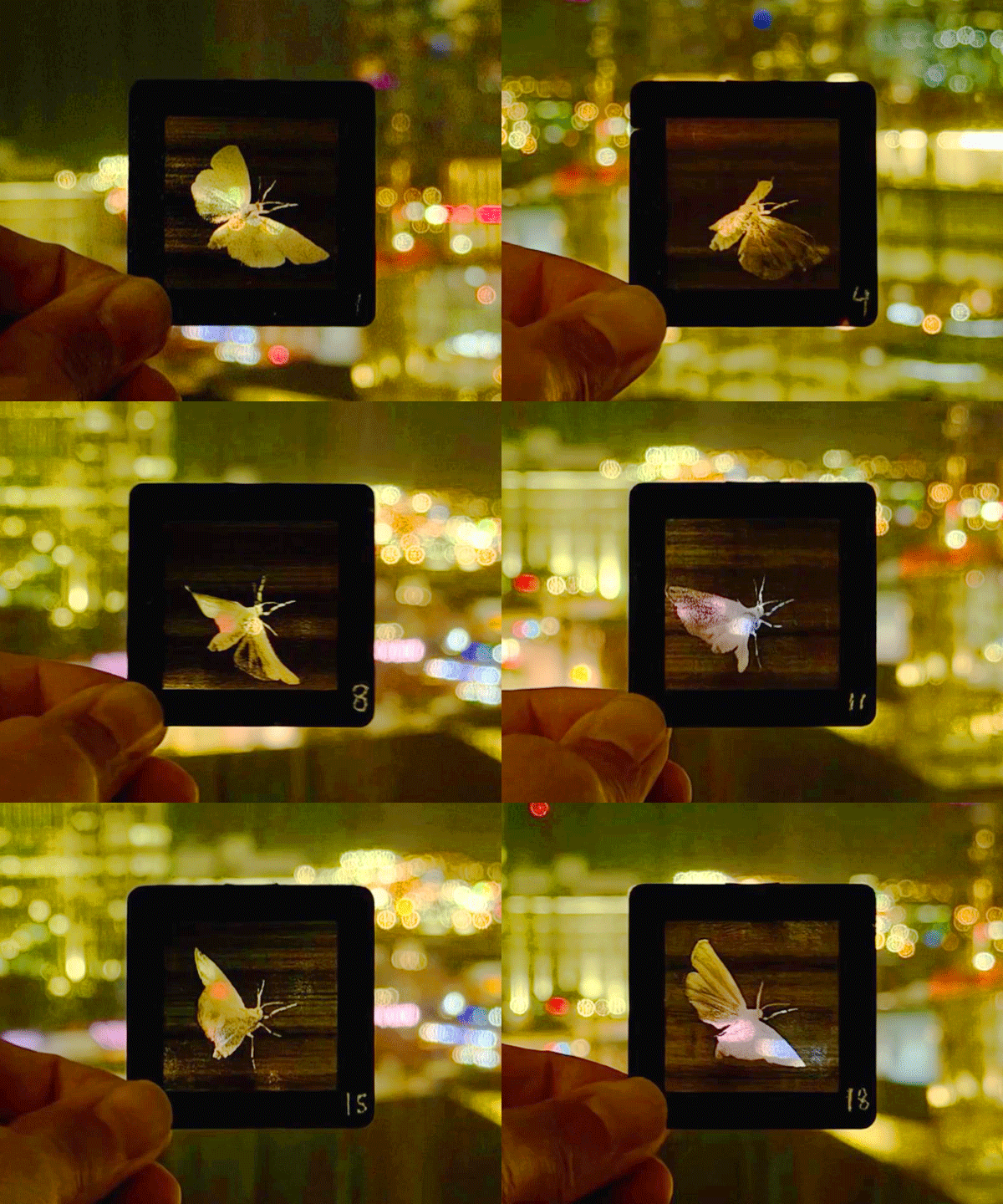
There’s something creators don’t see coming with AI. I didn’t see it coming until recently. Perhaps you are already ahead of me. Here’s what will happen…
Everyone is expecting AI to be just another tool. Like every technology that came before, artists assume that generative AI will be a new helpful tool in their bag of tricks. That’s how it’s being packaged and that’s the pitch many artists are swallowing. Cameras, computers, apps… prior to AI, tools have always helped artists improve their craft. But AI is not entirely here to help you and I fear artists won’t realize it until it is too late.
Before I explain the bad news that’s coming, are you following the story of how AI is gutting musical artists? Here’s what’s already happening…
Listening to music is often a background activity. Maybe you like to work to techno. Maybe you exercise to rap. Maybe you have classical playing in your study. Spotify has to pay artists when you stream music this way. And since you aren’t giving the playlist your dedicated attention, when the algorithm suggests the next song it has to decide which artist gets paid. Now that AI can make synthetic music that resembles the genre you are streaming, Spotify can pick music that doesn’t require a payout. Slop is free. Spotify is choosing to avoid paying artists and none but the most dedicated fans will even notice the sleight of hand.
The same trick will destroy visual artists but with a twist. Imagine you create something unique, something that starts grabbing attention. The algorithm is watching and measuring the engagement. Your art is flagged as “worth copying” by the algorithm. Image recognition has gotten so good that generative AI prompts can be created by feeding in source images. It will be trivial to pump the art that the algorithm flags as noteworthy into an image/video generation AI. It can then start slipping the synthetic art into people’s feeds, split-testing variations, and identifying the AI generated content that people like. Frankly, I’m surprised it isn’t happening already. Maybe it is.
When Higgsfield AI copied my animation recently there were certainly heartless humans involved. But there doesn’t have to be, this will soon be automated.
So let me paint the picture...
You create the best work you are capable of. The algorithm will show it to just enough people to learn that it can go viral. Your traffic will spike. But then suddenly it will stop, like a faucet being shut off. At this point, the algorithm is done with you because it has the info it needs to create clones of your work. No, you are not an artist who is empowered by AI, your ONLY VALUE is to create the ideas that AI can copy and exploit. You might as well not have an audience in this scenario.
If you are a creator on TikTok you might notice a similar pattern already. Your posts often seem to hit a wall where traffic drops off a cliff. That’s because when you make a post, the algorithm serves your creation to a handful of people. If you get enough likes/shares/comments in the first test it will keep showing it to more people, possibly with different interest profiles. If your post keeps passing the tests it will keep getting shown. But once your post falls below the “keep showing it” threshold the algorithm abandons you. The algorithm literally sees your art as a waste of resources the moment you fail its tests for virality.
The algorithm is already not showing your work to anyone, but it’s only going to get worse once it can choose between showing your original work vs a custom version of your work that it has altered to satisfy the gaze of brainless doom scrollers. Why would the algorithm help your art get seen when the it could simply make it itself? We’ve been sold a lie that AI will help us improve our art, the truth is that we are optional cogs in a slop-machine that has yet to operate at full capacity.
Just like the slop flooding the Spotify streams, the AI-generated posts on Instagram and TikTok will be good enough for most audiences. Only the true fans and people with discerning taste will be able to resist the slop. Few will care, most will be satisfied to swipe through the sugar-coated slime.
Is there a way to stop this? No and yes. We can’t stop the algorithm + AI combo from flooding us with sludge. It’s going to happen. And sadly, it will be popular. It’s going to be hard, if not impossible for artists to find a large audience. Experiencing a wide mainstream breakout will be unlikely. But there might be a path. It would look like this…
Hone your craft. Your art has to be good but that alone isn’t enough. You need to be a real person, so “obviously human” that the AI looks stupid when it tries to clone you. That means showing your flaws. It means sharing your in-progress work, your scraps, and half-baked ideas. The messy side of the creative process – the stuff we want to sweep under the rug in order to convey a persona of perfection – that will be vital because these clues will become the “proof-of-life” signals that will draw other humans to you.
You can’t hide behind pretty pictures and a carefully constructed brand identity any more. I predict a decline in the sexy model influencer path to success. That’s too easy to copy and fake. But the weirdos like you and me? I think we still have a chance. If we can somehow cultivate an audience of true fans – humans who seek out our creations because we’ve earned their trust as genuinely interesting human beings – there is still hope. That’s my strategy and I hope you continue to follow me on this adventure.
Stay creative. Your friend,
Ade
Great points; I just hope the bots aren't taking notes and strategizing a work around. I'm still positively shook by that recent AI theft of your *immediately recognizable* work. And the audacity of that brand to leave it UP after so many of us posted nasty-grams in the comments(!) . . . Crazy times.
Playing devil’s advocate here: AI systems trained on AI-generated outputs degrade. Each generation loses fidelity to the distribution of human-created content. The technical literature calls this “model autophagy disorder” or just collapse. Synthetic content as training data produces progressively worse synthetic content. Which means human creation isn’t just optional fuel, it’s the substrate preventing recursive degradation. It’s not in their best interest to alienate the teachers that trained their student.
Mimicry is the best form of flattery. Mimicry with a paycheck should be institutional.
Solution: Why not create multimodal art? Make art that exists in dimensions. One that requires physical human visitation, another that transcends platforms, another the machine can eat. There’s a certain beauty watching a machine attempt to regurgitate and choke on the philosophy that drove human ingenuity as both it's cure and poison that births the answer to its own problem it can't compute.